Anthropic's 2028 Warning: What Your Roadmap Misses
Anthropic disclosed 60% odds of AI training its own successor by 2028 while filing for IPO. See the enterprise AI roadmap clauses your contracts are missing.
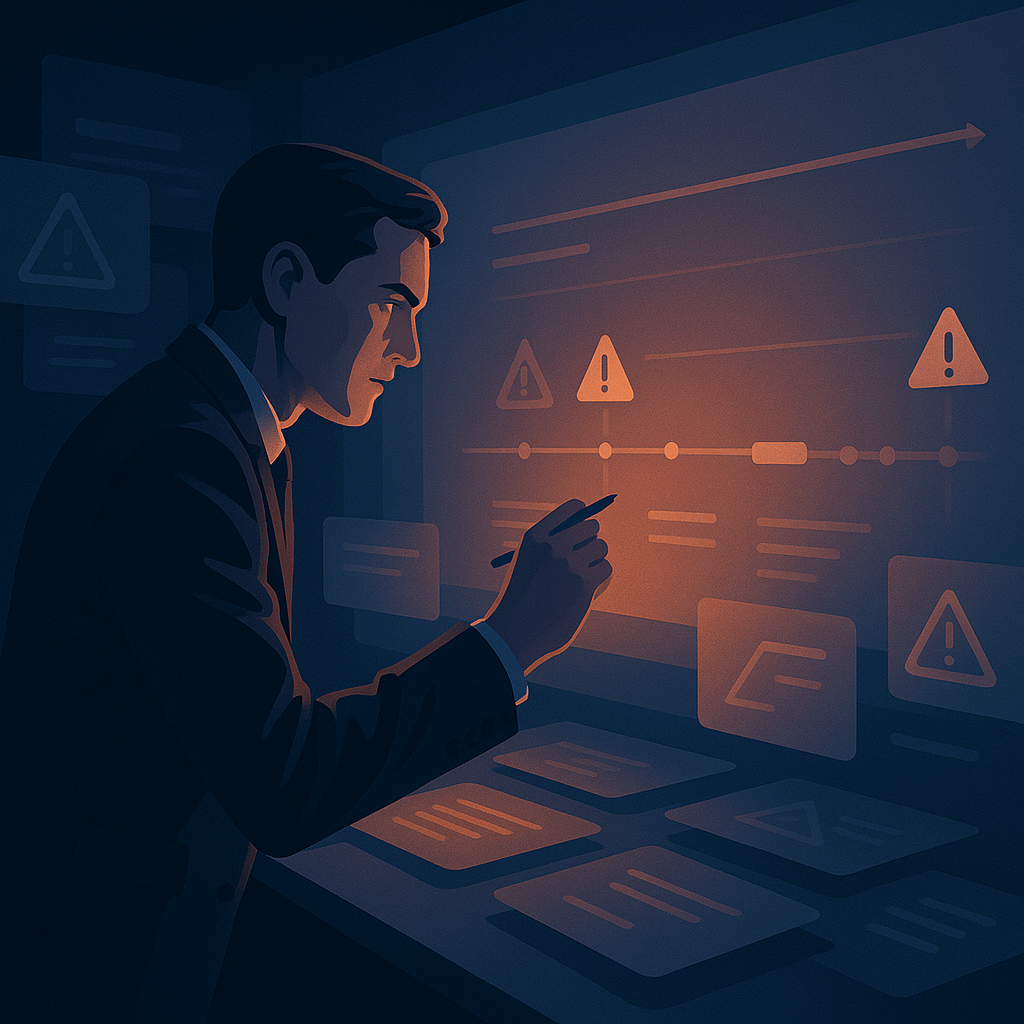
On June 4, Anthropic published “When AI builds itself” with two numbers that should be sitting on every enterprise architect’s whiteboard right now. More than 80% of the code merged into Anthropic’s own production codebase in May 2026 was authored by Claude. Jack Clark, the company’s policy lead, attached his name to a 60% probability that AI will train its own successor model by the end of 2028. That’s not a researcher’s blog post. It’s a signed disclosure from the vendor your three-year AI roadmap depends on.
Eleven days before that paper landed, Anthropic filed a confidential S-1 targeting a $965 billion IPO valuation in October. The same company asking the world to build a verifiable pause mechanism for frontier AI is the company asking Wall Street to underwrite a $965 billion bet on the trajectory that pause would interrupt.
Enterprise procurement teams writing three-year Claude contracts this quarter are pricing exactly none of this in.
Quick Verdict
| Question | The Answer |
|---|---|
| What did Anthropic publish? | ”When AI builds itself,” dated June 4, 2026, signed by Marina Favaro and Jack Clark. |
| Headline production metric? | 80%+ of code merged into Anthropic’s May 2026 codebase was authored by Claude. |
| Probability Jack Clark assigned to recursive self-improvement by end of 2028? | 60%. |
| What does “recursive self-improvement” mean here? | An AI model capable of training the next generation of AI without a human writing the training code. |
| IPO filing date? | Confidential S-1 filed June 1, 2026. Target October 2026 IPO at $965B. |
| The pause proposal? | A coordinated, verifiable, multilateral agreement across well-resourced labs in multiple countries. |
| Will the pause happen? | Almost certainly not. The preconditions are political, not technical. |
| What enterprise procurement has not priced in? | Model discontinuity risk from an AI-generated successor model rendering current Claude APIs commercially obsolete. |
| Where the gap lives in your contract? | No standard clause covers vendor model architecture changes triggered by autonomous model authorship. |
| What to do this quarter? | Rewrite the model version, deprecation, and data-portability clauses before the IPO. |
The Disclosure Is a Vendor Risk Filing in Disguise
Most coverage of the Anthropic paper has treated it as a research curiosity or a safety policy memo. The career-implications angle got covered well, including in the Claude Writes 80% of Anthropic’s Code piece I wrote on the same disclosure. What has not been covered is the procurement read.
The paper is, structurally, a vendor risk filing. The vendor is telling you what its product roadmap looks like under a trajectory the vendor itself believes is more likely than not. The trajectory says that within roughly 30 months, the next version of Claude may be designed and trained by Claude. The architectural choices that produce that successor are not the architectural choices that produced the model your contract is written against. Your API surface, your fine-tuned weights, your prompt library, your evaluation suite, your data pipeline, all of it sits on assumptions about model continuity that the vendor just told you may not hold.
The 60% number is the part to internalize. A vendor saying “our next product cycle has a 60% chance of being autonomously designed by our current product” is describing a discontinuity, not a roadmap. Investors read that as cost curves compressing and the moat widening. Enterprise buyers should read it differently. The product you’re integrating today may not exist in a recognizable form by the time the contract you’re signing this quarter expires.
What is recursive self-improvement and why does it create enterprise contract risk?
Recursive self-improvement is the point at which an AI system can design, train, and validate the next generation of AI without a human writing the training code or the evaluation suite. Anthropic’s paper describes the current state as 80%+ of Claude’s own code being authored by Claude, with the remaining bottleneck sitting in human review. Jack Clark places 60% odds that the bottleneck closes by the end of 2028. For enterprise buyers, the contract risk is that successive Claude model versions will diverge architecturally from the current API in ways the standard model-version and deprecation clauses don’t anticipate. Those clauses assume human-directed product roadmaps with quarterly release cadences and backwards-compatible interfaces. An AI-authored successor model isn’t constrained by the previous model’s design assumptions. The data structures, context handling, tool integration patterns, and pricing units you built your stack around may not survive the next version cycle in a recognizable form.
The Pause Proposal Is the Real Tell
The paragraph that closes the Anthropic paper is the one your procurement team should screenshot. The company asks the field to build a verifiable mechanism that allows well-resourced labs across multiple countries to jointly slow or pause frontier development if the trajectory accelerates past safe limits. The proposal is conditional on three preconditions that have to land simultaneously: multilateral coordination, verifiability, and well-resourced labs in multiple countries actually signing on.
Stop and read that list again.
Multilateral coordination on AI development has not happened. Verifiable pause mechanisms across competing labs do not exist. Well-resourced labs in multiple countries include US, Chinese, and European players whose policy frameworks are actively diverging. Each precondition is independently improbable inside a 30-month window. The compound probability is something close to zero.
Anthropic knows this. The pause proposal is, functionally, a public-record disclosure that the company believes the trajectory will continue and that the institutional brakes it is asking for will not arrive in time. The investor presentation supporting the $965B IPO valuation is built on exactly that assumption. A vendor filing for a $965 billion public listing days before publishing a paper that calls for a global pause is a vendor signaling that the pause won’t happen, the trajectory will play out, and the price tag reflects the trajectory not the brake.
The political-economy read is direct. The pause is asked for the record. The product roadmap is built for the trajectory. The contract you sign this quarter has to be priced against the trajectory, not the pause.
The Contract Clauses That Do Not Exist Yet
Walk through a standard enterprise AI contract template right now. Pull the section on model versioning. The clause covers backwards-compatible API changes, deprecation timelines, and minimum notice windows for breaking changes. The assumption baked into the language is that the vendor’s product team makes quarterly decisions about which APIs to deprecate, with humans reviewing the business impact and the customer base.
That assumption breaks under recursive self-improvement.
An AI-authored successor model is not constrained by the previous model’s API surface. The training process that produces it does not weight backwards compatibility the way a product manager would. The deprecation decision is not a quarterly product review. It is a function of whichever architecture the autonomous training run converges on. The vendor cannot guarantee continuity it does not control, and the standard contract language does not cover the case where the vendor itself is not the author of the architectural decision.
Three categories of clause need rewriting before any new Claude contract gets signed against a multi-year term.
First, model version continuity. The standard clause needs language covering vendor obligations when a successor model is authored by an autonomous training process, including minimum API compatibility commitments, fallback access to the legacy model version for a contractually defined window, and a re-pricing trigger if the successor model’s pricing units differ materially from the current model’s.
Second, data portability and weight access. The standard clause needs language covering buyer rights to extract fine-tuned weights, prompt libraries, evaluation datasets, and embedded knowledge in a portable format if the successor model architecture renders the current artifacts unusable. This is the clause most enterprise AI contracts ship without right now, and it is the clause that protects two years of internal AI investment from getting stranded by a single vendor model transition.
Third, deprecation and notice. The standard clause needs language extending minimum notice windows from the typical 90 or 180 days to something on the order of 18 to 24 months for any successor model transition that materially changes the API surface. The longer window reflects the reality that enterprise stacks built on the current model take quarters to migrate, not weeks. The vendor that controls the deprecation timeline controls the migration cost. Move the timeline into the contract.
The clause work is technical. The principle is not. The buyer who writes these clauses into the contract this quarter buys the right to negotiate from a defined position when the transition happens. The buyer who does not write them in negotiates from the vendor’s preferred position after the transition is announced.
The IPO Window Closes the Negotiation Door
There is a calendar dimension to this that compounds the contract dimension. Anthropic’s October IPO target means the pre-IPO negotiation window closes in roughly 16 weeks. Pre-IPO Anthropic and post-IPO Anthropic are different counterparties, and the difference shows up specifically in how flexible the model-version and deprecation clauses are.
Pre-IPO Anthropic wants enterprise logos for the roadshow. Custom clauses on model continuity, weight portability, and deprecation notice are negotiable this quarter because the cost of losing a Fortune 500 logo on the investor presentation is bigger than the margin hit of agreeing to non-standard terms. Post-IPO Anthropic answers to a public market that expects margin expansion and standardized terms. The same clause that gets signed in August costs basis points in February.
I made the broader version of this argument in the Anthropic IPO contract lock-in piece earlier this month. The recursive self-improvement disclosure is the specific reason to add the continuity clauses to the pre-IPO negotiation list. The IPO timeline is the calendar reason to do it before October.
The procurement team that walks into Q4 with standardized terms and no continuity language gets the post-IPO contract. The team that walks in this quarter with the continuity clauses drafted gets the pre-IPO contract. The clauses are the same words. The negotiating posture they ship from is not.
The Diversification Math Just Got Harder
The other read on the Anthropic disclosure is that single-vendor exposure inside the AI stack just repriced sharply. The argument for vendor diversification used to be primarily about pricing power and political risk. The recursive self-improvement disclosure adds model discontinuity as a third axis, and the third axis is the one that breaks single-vendor stacks the fastest.
The Ramp AI Index data I covered earlier this month already pointed at the diversification gap inside enterprise AI spend. Anthropic captures roughly 32% of enterprise AI spend at the moment, with the gap to second place widening. The buyer comfortable with that concentration on a 12-month horizon should not be comfortable with it on a 36-month horizon when the vendor itself is telling you the architecture may discontinue inside the window.
The hedge is the same hedge I have argued for since the AI stack expiration date piece ran. Build the workflow against the model-agnostic interface. Keep the prompt library, the evaluation suite, and the fine-tuned weight artifacts in formats that survive a vendor transition. Reserve at least 15% of the AI spend pool for a second-source vendor whose model architecture is not on the same recursive self-improvement trajectory at the same pace. The 15% is not the steady-state budget. It is the call-option premium that buys the right to migrate quickly if the Anthropic trajectory plays out.
The AI token price war is the pricing side of the same call option. The contract flexibility argument compounds with the recursive self-improvement risk. Lock in the pricing flexibility now. Lock in the continuity clauses now. Buy the call option on a second vendor now. The three moves are the same hedge expressed three ways.
Three Moves Before the October IPO
Sized for any enterprise CTO, CIO, or head of procurement running a Claude contract above $1 million annual spend. Doable inside the 90-day pre-IPO window. None require vendor concessions that have not been granted in similar deals already.
-
Add recursive self-improvement continuity language to the active contract template. Specifically, write a clause that defines vendor obligations when a successor model is authored by an autonomous training process, including a minimum 18 to 24 month notice window before deprecation, contractual access to the legacy model version for the duration of the active term, and a re-pricing trigger if the successor model’s pricing units differ materially from the current model’s. The clause does not require Anthropic to predict the trajectory. It requires Anthropic to compensate the buyer if the trajectory breaks the buyer’s stack. That is a defensible ask in any procurement negotiation this quarter.
-
Write the data portability clause covering fine-tuned weights, prompt libraries, and evaluation datasets. The clause needs to grant the buyer the right to extract these artifacts in a portable format at any point during the contract term and for 12 months after termination. The format specification matters. A clause that promises portability without specifying the format is a clause the vendor controls. Write the format into the contract. The clause protects the two years of AI investment your team has accumulated against any single vendor model transition. The cost of the clause is roughly zero. The cost of not having it during a discontinuity event is the entire embedded knowledge base.
-
Allocate 15% of the AI spend pool to a second vendor whose model trajectory is not on the same recursive self-improvement curve. The 15% is not a redundancy line. It is a call option on rapid migration if the Anthropic trajectory plays out faster than the contract continuity clauses can absorb. Pick the second vendor based on architectural divergence, not on price parity. The point of the hedge is that the second vendor’s failure modes are not correlated with the first vendor’s. A second vendor on the same training paradigm and a similar model size hedges almost nothing. A second vendor with a meaningfully different architecture or training approach hedges the discontinuity risk specifically.
My Read
The Anthropic disclosure is the cleanest enterprise risk signal any AI vendor has published this cycle. Most coverage has treated it as a research milestone or a safety policy memo. The procurement read is sharper. A vendor publishing a 60% probability of model self-authorship by 2028, in the same quarter it files for a $965 billion IPO, while asking for a pause mechanism it knows almost certainly will not arrive, is a vendor signaling that the trajectory is real, the brakes are theatrical, and the contract you sign this quarter has to be priced against the trajectory.
The standard enterprise AI contract template does not cover recursive self-improvement. The standard model version, deprecation, and data portability clauses assume human-directed product roadmaps with backwards-compatible APIs. The Anthropic disclosure tells you the assumption may not hold inside the contract window you are about to sign. The clauses that close the gap are signable inside any pre-IPO Claude negotiation this quarter. The same clauses will be harder to win after October.
The pause proposal is the part to take seriously as a signal about the vendor’s read on the trajectory, not as a credible policy intervention. The conditions Anthropic attached to the pause are designed to make it visible and unlikely simultaneously. The visible-and-unlikely combination is the public-record version of saying “we will not be slowed down.” That signal is the basis on which the $965 billion valuation makes sense. It is also the basis on which the enterprise buyer should rewrite the contract before the IPO.
Sixteen weeks remain in the pre-IPO window. The continuity clauses are roughly 200 words of contract language. The data portability clause is another 150. The second-vendor allocation is a budget line. None of the three require a roadmap call with Anthropic to approve before drafting. All three reposition the buyer for whichever side of the 60% the trajectory lands on.
The vendor told you what it thinks the next 30 months look like. The contract you sign this quarter is the only durable record of what you did with that information.
Write the clauses.
Related Reading:
TAGS
What is this worth in your business?
The free Build Audit is 30 minutes. You leave with a ranked list of the automations worth doing in your business, whether or not we build them.
Related Articles
Keep Your Customer Data Out of ChatGPT and Claude
Free ChatGPT and Claude accounts can train on what your team types in. Two switches turn that off for nothing. Here is where to find both tonight.
How to Tell If an AI Vendor's ROI Claim Is Real
Learn the three-question test that separates a real AI vendor ROI number from a marketing one, before you sign the contract or approve the next renewal.
Thomson Reuters Just Answered Your Build vs. Buy Question
Thomson Reuters spent $40M fine-tuning an open-source model on Westlaw data to match frontier performance. Compare that build vs. buy math against your own.