IT Banned ChatGPT. Lockdown Mode Changes That.
OpenAI just shipped Lockdown Mode for ChatGPT Business. Discover the new admin controls that flip the enterprise conversation from block-it to govern-it.
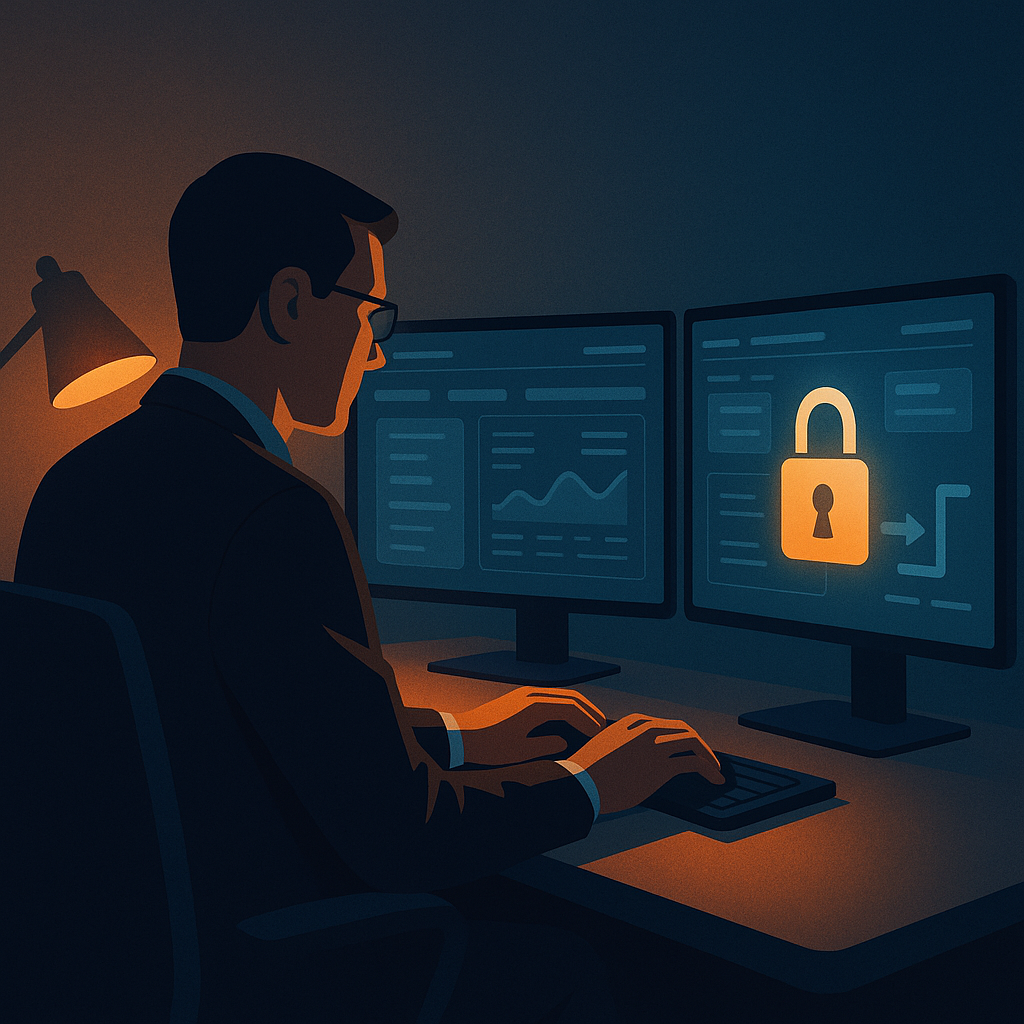
OpenAI shipped “Introducing Lockdown Mode and Elevated Risk labels in ChatGPT” and pushed the rollout to self-serve ChatGPT Business accounts on June 8, 2026. The feature shuts off web browsing, Agent Mode, Deep Research, file downloads, and every external connector inside ChatGPT to block the prompt injection paths attackers use to exfiltrate data. Workspace admins can build custom Lockdown Mode roles and assign them by user or group. That last piece is the part most security teams have been waiting two years for.
The enterprise conversation about ChatGPT changes today. The default move for most IT shops since 2023 has been “block the domain and tell legal.” That posture is no longer the only credible answer. The new answer is govern the use case with granular controls and stop pretending the shadow usage isn’t happening.
Quick Verdict
| Signal | What It Means for You |
|---|---|
| OpenAI launched Lockdown Mode for ChatGPT Business on June 8, 2026 | The first ChatGPT feature designed for tiered enterprise governance, not blanket access |
| Lockdown disables browsing, Agent Mode, Deep Research, file downloads, all connectors | The exact surfaces attackers use for prompt injection-based exfiltration get shut down |
| Workspace admins can create custom Lockdown Mode roles | Tiered enforcement: high-risk roles get strict mode, general staff get sanctioned full access |
| Admins keep granular per-app, per-action controls inside Lockdown | The feature is a policy lever, not an on-off switch buried in user settings |
| 98% of organizations report unsanctioned AI use | The “we blocked it” status quo is performative. Your data is already in ChatGPT |
| 49% of leaders expect a shadow AI data incident inside 12 months | The breach window is not theoretical. The clock is the surveyed expectation, not a hypothetical |
| Your real move this quarter | Pull the shadow audit. Build the role matrix. Ship the policy before the next incident lands |
What Lockdown Mode Actually Does
Strip the announcement copy and the feature is three concrete restrictions plus an admin layer. OpenAI’s own help documentation lists what gets turned off when Lockdown Mode is on. Live web browsing. Agent Mode. Deep Research, including shopping research. Image generation in responses. Canvas networking. Every external connector your users wired up to Gmail, Google Drive, GitHub, Notion, Slack, and the rest. File downloads from the chat.
The pattern in that list is not random. Each one of those surfaces is a documented prompt injection vector. An attacker hides a malicious instruction in a webpage your user browses to from inside ChatGPT. Or in a PDF the user uploads. Or in a Slack message the connector pulls. The model treats the hidden instruction as legitimate user intent, then uses its own tools to exfiltrate whatever the user has access to. Lockdown Mode breaks the chain by removing the tools. No browsing, no connectors, no Agent Mode, no exfiltration path.
Help Net Security’s coverage frames it correctly. The point of the feature is not to make ChatGPT safer for all users. It is to give security-conscious roles a deterministic mode where the model can’t talk to the outside world, period. Executives. M&A teams. SOC analysts. Legal during active matter. Anyone whose access patterns make them the most expensive target in the building.
The admin layer is the part that matters more than the feature itself. Workspace admins can spin up custom Lockdown Mode roles, decide which apps and which specific actions inside those apps stay reachable for users in that mode, and assign roles individually or to groups. That is the first time ChatGPT has shipped real policy infrastructure instead of a single org-wide toggle.
Why The Old “Ban It” Posture Is Done
The reason most IT teams blocked ChatGPT at the network layer in 2023 was structural. The product had no admin controls worth deploying. You either gave everyone access to a system that could browse, ingest documents, and call tools, or you blocked the domain and waited for sanctioned alternatives.
That bet didn’t age well. Per the Programs.com shadow AI roundup, 98 percent of organizations report unsanctioned AI use inside the company, and 49 percent expect a shadow AI data incident inside the next 12 months. The block-the-domain posture didn’t stop the usage. It pushed the usage to personal accounts on personal devices, where the org has zero visibility, zero control, and zero data residency story.
I covered the shape of that gap in the shadow AI productivity cost piece and the LayerX numbers in the State of AI Usage 2026 breakdown. The pattern is the same in every dataset. Your people are using ChatGPT. They are pasting customer data, source code, contract drafts, and board materials into a browser tab the company doesn’t see. The block is fictional. The exposure is real.
Lockdown Mode is the first ChatGPT feature that lets you replace the fiction with a policy artifact. You sanction the tool, govern the role matrix, and shut down the exfiltration paths for the highest-risk seats. The shadow usage doesn’t go to zero. It compresses, because the sanctioned path is now better than the personal-account path for most legitimate uses.
The Role Matrix Most Security Teams Should Build This Month
The granular control story only works if someone owns the role matrix. Most companies do not have one yet.
The default OpenAI Lockdown Mode is a useful starting point but the wrong endpoint. The right endpoint is three to five custom roles your admin team builds, mapped to the actual risk tiers in the org. Here is the version that works for most mid-market and enterprise rollouts.
Standard role. Full ChatGPT access, including web browsing and approved connectors. Most of the workforce sits here. Data classification policy still applies. Memory governance still applies (the same problem I covered in the Dreaming V3 memory piece). But the tool is fully usable for the 80 percent of tasks that don’t touch sensitive data.
Limited connector role. Lockdown Mode on, with a curated allowlist of internal connectors approved by security. Web browsing off. Agent Mode off. Deep Research off. Useful for staff who need ChatGPT plus the document store but should not be browsing arbitrary external content.
Maximum lockdown role. Pure Lockdown Mode. No connectors. No browsing. No external surface at all. Reserved for executives, M&A teams, security operations, legal in active matter, and anyone with persistent access to crown-jewel data. The model still works as a writing and reasoning tool. It just cannot reach out.
Investigation role. Full Lockdown plus session monitoring and shorter memory retention. For incident response, internal investigations, or any context where the conversation itself needs to be defensible later.
The custom-role machinery is what makes the matrix shippable. The same admins who used to write firewall rules now write ChatGPT roles. The skill set is the same. The artifact is what the auditor will ask for in 2027.
What Is Prompt Injection And Why Lockdown Mode Targets It
In 40 words: prompt injection is when an attacker hides instructions in content the model reads (a webpage, a document, a connector message) to trick the AI into taking unauthorized actions on the user’s behalf. Lockdown Mode blocks it by removing the external content surfaces and tool-calling paths the attack requires.
That answer compresses the threat model. The longer version matters because most procurement teams will hear “prompt injection” and route the question to the wrong owner.
Prompt injection is not a model bug the way a SQL injection is a database bug. It is a behavior an LLM exhibits because the architecture has no inherent way to distinguish instructions from data. Every piece of text in the context window has the same status to the model. So a malicious instruction buried inside the third page of a PDF the user uploads gets treated with the same authority as the user’s own prompt.
The only structural defenses are the ones that remove the attacker’s reach. Don’t let the model browse arbitrary URLs. Don’t let it ingest untrusted documents. Don’t let it call tools that touch sensitive systems. That is the Lockdown Mode design. The feature does not claim to detect or prevent prompt injection inside the model. It cuts off the surfaces the attack needs to land. That is the right architectural answer right now.
I covered the broader threat model in the three AI security threats every SMB needs to defend against and the OpenAI GPT-5.4 cyber strategy piece. The same logic applies at the enterprise level. The attack surface is the tool-calling surface. Shrink the surface, shrink the attack.
The Shadow AI Math That Forces The Conversation
The shadow AI numbers are the part most boards still haven’t internalized. Pull them apart and the picture is unambiguous.
98 percent of organizations report unsanctioned AI use. That is not a minority problem. That is universal exposure. 49 percent of leaders surveyed expect a shadow AI data incident inside 12 months. That is the leadership group telling you the breach is on the way and the only question is which quarter. More than a third of employees admit to sharing confidential data with AI tools outside company oversight. That is the leak channel.
The cost numbers compound. Organizations with high shadow AI usage saw average breach costs climb roughly $670,000 above the baseline. That is one breach. The CFO conversation about Lockdown Mode adoption costs versus a single shadow-AI-linked breach is a short conversation.
The blocking strategy compounded this problem instead of solving it. Every blocked domain pushed another tranche of users to personal accounts on personal devices, where the data left the corporate perimeter entirely. I covered the same dynamic from a procurement angle in the AI decision your IT team already missed. The IT team that blocked ChatGPT in 2023 didn’t reduce risk. They reduced visibility.
Lockdown Mode is the first feature that makes the sanctioned path better than the shadow path for most use cases. The user gets ChatGPT. The org gets the audit log, the role assignment, the data residency story, and the ability to disable the exfiltration vectors for the seats that need it. The shadow account stops being the only way to get work done.
What This Forces Inside Your Org
Three operational shifts that follow directly from Lockdown Mode existing.
The “block it” policy needs an expiration date. Most companies still have a written policy that says employees can’t use ChatGPT for work. Most companies also know the policy is not being enforced. Lockdown Mode is the technical artifact that makes a sanctioned policy credible. Pull the existing policy. Rewrite it around the role matrix. Ship it with a deadline. Six weeks is reasonable. The policy reset is the part that converts shadow usage into governed usage.
The procurement conversation has new leverage. OpenAI shipped Lockdown for self-serve Business on June 8. Enterprise customers negotiating renewals this quarter have a fresh ask list: custom role granularity, audit log export, connector allowlist management, Workspace-level Lockdown defaults. The same dynamic I covered in the AI subprocessor disclosure gap piece applies here. Vendor product roadmap shifts when enterprise buyers ask for the same control three quarters in a row. Ask now.
The shadow audit is overdue. Before you build the role matrix, you need to know what the actual usage looks like. Pull the SSO logs. Pull the network egress data on chatgpt.com if you still have a block in place. Run an anonymized survey if you don’t. Document where ChatGPT is in active use, which roles are using it, and what data classes are being touched. That document is the input to every decision you make in the next 90 days, including which seats get Lockdown and which get standard access.
Where The Limits And Caveats Are Real
Two cautions before this becomes a security team victory lap.
Lockdown Mode is a containment feature, not a detection feature. It blocks the exfiltration paths. It does not detect when an attacker has crafted a prompt injection payload, and it does not log the attempt in a way your SIEM can ingest today. The signal a SOC team gets from a Lockdown deployment is “the surface is reduced,” not “we caught the attack.” That is the correct trade for the highest-risk seats. It is not enough alone.
The user friction is real and the role matrix has to acknowledge it. A Lockdown role with no connectors and no browsing is a measurably less useful ChatGPT for most knowledge work. Putting the entire workforce in maximum Lockdown defeats the point of sanctioning the tool. The right design tiers the policy so the high-risk seats accept the friction in exchange for the protection, and the general workforce gets a usable product that still routes through corporate governance. Get the tiering wrong and the shadow usage migrates right back to personal accounts.
Neither caveat changes the direction. The feature is a real upgrade. The architecture is correct. The admin layer is the part that finally makes enterprise governance buildable instead of theoretical.
Three Moves Before The Next Board Cycle
Sized for a CISO, CIO, or AI program lead at a mid-market or enterprise org. Doable inside 60 days. Will move your AI security posture from blocking-and-hoping to governing-and-measuring.
-
Run the shadow ChatGPT audit this month. Pull SSO logs from Google Workspace and Microsoft 365. Pull network egress on chatgpt.com and oai.com domains. Anonymized survey for personal-account usage on corporate devices. The deliverable is a one-page footprint document: who uses ChatGPT, on what accounts, with what data classes. Without that document, the role matrix is guesswork.
-
Draft the role matrix and pilot two roles this quarter. Pick the executive Lockdown role and the standard role as the first two. Deploy them to 20 to 50 users you can monitor closely. Measure the friction signal: support tickets, requests to leave Lockdown, return-to-shadow indicators. Iterate the connector allowlist based on what real work needs. Six weeks of pilot data beats six months of policy committee drafting.
-
Get the contract conversation on the calendar with OpenAI. If you are on Enterprise pricing or negotiating Business at scale, the next conversation needs to cover Lockdown roadmap, custom role limits, audit log export format, and SIEM integration. The procurement window where buyers shape the product is open now and closes when the feature stabilizes. The same lock-in dynamic I called out in the Anthropic IPO contract piece applies here. Asks made in Q3 get into the Q4 roadmap. Asks made in Q1 next year do not.
The career version of this is also worth naming. The AI governance and AI security operations roles are hiring faster than the labor market is producing them. The companies that build the role matrix in the next 60 days will be the same ones recruiting the people who run it through 2027. If you sit in a security org and want a credible AI governance role on your resume by the end of the year, the Lockdown rollout is the project to volunteer for.
My Read
Lockdown Mode is the most consequential ChatGPT enterprise feature OpenAI has shipped in 18 months, and the coverage so far has mostly missed why. The story is not “OpenAI added a security toggle.” The story is “OpenAI finally shipped the admin infrastructure that makes governed enterprise deployment a credible alternative to the ban-and-pretend status quo.”
Two takeaways I keep coming back to. First, the right way to read this feature is policy infrastructure, not product upgrade. The custom role machinery is what lets a CISO build the actual control matrix the auditor will ask about. Most companies have a written ChatGPT policy and zero technical enforcement behind it. This is the first chance to change that.
Second, the timing is on the buyer’s side. The feature is fresh enough that the role granularity, audit log surface, and SIEM integration story are all still being shaped by enterprise feedback. Quiet companies who deploy Lockdown without engaging the procurement conversation get the default product. Loud companies who push specific asks get the next version of the product. The leverage window is open right now and closes when the feature stabilizes.
The work is not glamorous. Audit the shadow footprint. Draft the role matrix. Pilot two roles. Push the procurement conversation. None of that produces a press release. All of it is what separates the orgs that govern ChatGPT in 2026 from the orgs that keep pretending they banned it.
Run the audit this month. Pilot the roles this quarter. Get the procurement asks on the calendar this week.
The default ChatGPT policy at most companies is fictional. Lockdown Mode is the first feature that makes a real policy possible. The only question is whether your security team picks up the tool before the next shadow incident does.
Related Reading:
- Shadow AI Is Costing More Than Productivity Saves
- LayerX State of AI Usage 2026: The Power User Risk
- ChatGPT Now Remembers Everything. Now What?
- Your Software Vendors Are Running AI on Your Data
- The 3 AI Security Threats Every SMB Needs to Defend Against
- The Enterprise AI Decision Your IT Team Already Missed
- OpenAI GPT-5.4 Cyber: The Enterprise AI Security Strategy
TAGS
What is this worth in your business?
The free Build Audit is 30 minutes. You leave with a ranked list of the automations worth doing in your business, whether or not we build them.
Related Articles
Keep Your Customer Data Out of ChatGPT and Claude
Free ChatGPT and Claude accounts can train on what your team types in. Two switches turn that off for nothing. Here is where to find both tonight.

How to Tell If an AI Vendor's ROI Claim Is Real
Learn the three-question test that separates a real AI vendor ROI number from a marketing one, before you sign the contract or approve the next renewal.
Thomson Reuters Just Answered Your Build vs. Buy Question
Thomson Reuters spent $40M fine-tuning an open-source model on Westlaw data to match frontier performance. Compare that build vs. buy math against your own.