Google's AI Is Calling Your Business. Don't Opt Out.
Google AI calls businesses to check stock and pricing for shoppers. See why the Let Google Call opt out drops you from the shortlist instead of shielding you.
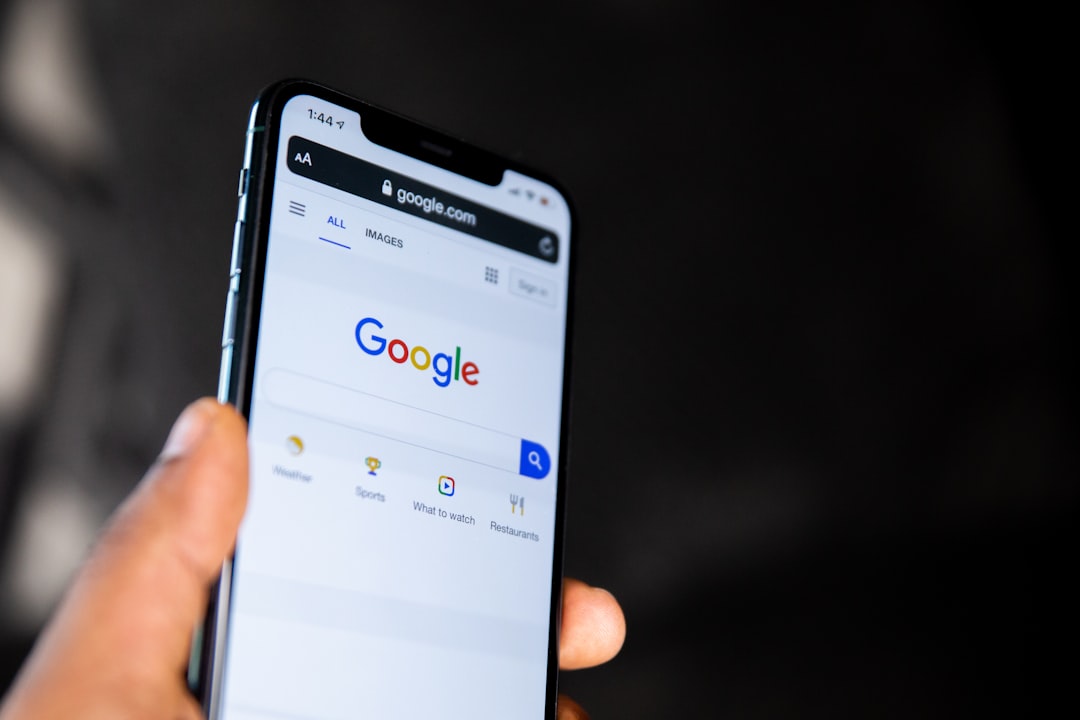
A shopper in your town types “wireless headphones near me” into Google, taps a button, and a Gemini-powered voice starts dialing local stores. Yours is on the list. Google’s agentic calling feature, branded “Let Google Call” in Search results, has been expanding across US categories since Google updated its documentation on July 24, 2026. The AI asks about stock, price, and promotions, then texts or emails the shopper a summary of what every store said.
Here’s the part nobody’s covering correctly. Every SMB newsletter and local-SEO agency blog is telling owners how to opt out. The setting is real and it takes about ninety seconds to flip.
Flipping it is close to the worst decision you can make right now.
Opting out doesn’t stop the shopper from shopping. It doesn’t remove you from Search or Maps. It removes your price, your stock status, and your quote from the one document the shopper actually reads before deciding where to spend money. Your competitor three blocks over stays in that document. You become an empty row.
Quick Verdict
| Question | The Answer |
|---|---|
| What is it? | Google Search AI that phones local businesses on a shopper’s behalf to check availability, pricing, and promotions. |
| Where does it run? | Google Search and AI Mode in the US, when a shopper adds “near me” or “nearby” to a product query. |
| Which categories? | Shopping side: toys, health and beauty products, electronics. Service side: appointment bookings, restaurant wait times, and service quotes. |
| Does the AI say it’s an AI? | Yes. It discloses that it’s Google calling for a customer and waits for verbal consent before continuing. |
| What does the shopper get? | An email or SMS summary comparing what each business reported. |
| Can you opt out? | Yes. Business Profile settings, Advanced settings, “Google automated calls and text messages.” |
| What does opting out actually do? | Stops the calls. Your details stop appearing in the shopper’s comparison summary. Your competitors’ details don’t. |
| Does opting out hurt your rankings? | No. Search and Maps visibility is unaffected. The damage happens at the decision point, not the discovery point. |
| Biggest real risk | Your front desk hangs up on the call and you never learn you were in the running. |
| What to do this week | Write a nine-word answer script, tape it to the phone, stay opted in. |
What is Google’s agentic calling feature?
Agentic calling is a Google Search feature that places an automated phone call to local businesses on a shopper’s behalf. The AI asks about product availability, pricing, and current promotions, then delivers a written summary to the shopper by email or text. It runs on Duplex, the same voice technology Google has used for restaurant reservations since 2018.
The feature started as a Search Labs experiment called “Ask for me,” limited to auto shops and nail salons in January 2025. It’s now a default behavior on regular Search results for millions of US shoppers.
The Opt-Out Advice Everyone Is Giving You Is Backwards
Read the sentence Google buried in its own Business Profile help documentation:
“If you share this info with Google, the customer receives an email or SMS text that includes your business’s product details or service quote.”
Sit with the conditional. If you share. The shopper’s summary is assembled from businesses that answered the phone and talked. Businesses that opted out contribute nothing to it, because there’s nothing to contribute.
Now picture what lands in the shopper’s inbox. Four hardware stores, three with a price and a yes-we-have-it, one with silence where the price should be. Which one loses the sale? You already know. Nobody drives across town to the store that Google couldn’t get an answer from.
This is the mechanic that the “protect yourself, opt out” advice completely misses. The opt-out was designed as a nuisance control, and as a nuisance control it works fine. It’s not a competitive shield. It’s a competitive forfeit, and it’s silent, which is what makes it dangerous. You don’t get a notification saying “you were excluded from 14 comparison summaries this month.”
I want to be fair to the people giving the opposite advice. Their concern is legitimate: a small shop with two employees genuinely can’t absorb unlimited robot calls during a lunch rush. Google caps repeat calls for the same request and avoids late-night and early-morning hours, but the volume question is real for a business with one phone line.
The answer to too many calls is a call-handling process. The answer is not disappearing from the buying decision.
What the Call Actually Sounds Like
The disclosure requirement matters more than the volume here, and it’s the detail that changes how you should train your staff.
TechCrunch reported that Google identifies the call as an AI calling on behalf of a customer, then proceeds only after getting verbal consent from the employee who picked up. Google’s own documentation confirms the calls are monitored and recorded.
That consent gate is where money leaks out of your business.
Your 19-year-old weekend counter hire answers, hears a synthetic voice say the word “automated,” and does what every human trained by a decade of robocalls does. Hangs up. That’s a declined consent. The call ends, your row in the shopper’s summary stays blank, and nobody in your company ever finds out that a customer with cash in hand was asking about you specifically.
You didn’t lose that sale to a competitor’s price. You lost it to a hang-up.
The 45-State Detail Worth Knowing
The rollout covers 45 US states. PPC Land reported that Indiana, Louisiana, Minnesota, Montana, and Nebraska are excluded.
Look at that list and the pattern is call-recording consent law. Those are states where recording a call requires more than one party’s agreement, and Google’s compliance team clearly decided the risk wasn’t worth it. If you operate in one of those five states, this isn’t your problem yet. Watch it anyway, because “yet” is doing real work in that sentence.
For everyone else, the feature is on by default. Nobody asked your permission, and there was no email.
How do you get your business ready for Google’s AI calls?
Six steps. A single owner can finish all of them in one afternoon, and step three is the one that actually protects your revenue.
- Confirm you’re opted in. Business Profile, More, Business Profile settings, Advanced settings, then check the toggles under “Google automated calls and text messages.” Leave them on.
- Verify the phone number on your profile rings a human. An AI calling a disconnected line reports back exactly what you’d expect. Call it yourself from a number your team won’t recognize.
- Write a nine-word script and tape it to the phone. “Automated Google call? Say yes, then answer their questions.” That’s it. That’s the whole training program.
- Pick your three answers in advance. Price, in-stock status, and how fast you can deliver or schedule. These are the only questions the AI is going to ask. Decide today what your team is authorized to say without checking with you.
- Audit your pricing before the AI does. This feature turns your counter staff into a live price feed for a comparison engine. If your posted price and your quoted price differ, that gap is now public.
- Log the calls for two weeks. Tally sheet by the register. Every AI call is a customer you didn’t know you had, and the count tells you whether this channel deserves more attention.
Step five is the uncomfortable one. Run it anyway, because the alternative is finding out what your team quotes when you’re not standing there.
The Real Risk Is Your Front Desk, Not Google
Owners are worried about the wrong threat. The concern I keep seeing is philosophical: robots calling my business, degradation of human commerce, where does this end.
The operational reality is duller and more expensive. Your staff doesn’t know this exists. When it happens, they treat it like the fourth spam call of the morning, because that is precisely what it sounds like for the first two seconds.
This is the same failure pattern I wrote about in Stop Losing $10K Monthly to Missed Calls. The revenue doesn’t leave through a dramatic front door. It leaks through a phone that rang and got handled badly, over and over, invisibly, until the quarter closes and the number is lower than it should be.
The difference now is that the caller is a qualified buyer who already picked you as a candidate. An AI doesn’t dial your number for fun. It dials because a specific person in your service area is trying to buy a specific thing today, and Google put you on the shortlist. That’s the warmest inbound lead your business gets, and it’s arriving disguised as a robocall.
The Anti-Hype Read
Four things worth saying before you rearrange your operation around this.
Volume is currently low, and that’s why you should fix it now. Most businesses in eligible categories are getting a handful of these calls a month, not a flood. Which means training your team costs you an afternoon and zero disruption. Do it while the stakes are small and the process is already in place when volume climbs.
Google’s incentives here are not your incentives. This feature exists to keep shoppers inside Google’s surfaces instead of clicking through to your site or picking up their own phone. You benefit from participating, and you’re also feeding a comparison layer that commoditizes you on price. Both are true. Participating is still the right call, because the layer gets built whether or not you’re in it.
Price transparency cuts against premium positioning. If your business wins on service quality, a summary email that lists four vendors by price is a bad format for you. The counter-move is training staff to attach one differentiator to every quote. “$180, and we can do it Thursday” beats “$165” more often than owners expect.
Nobody has published real conversion data yet. Google reports the feature exists and is growing. It hasn’t published close rates for businesses that participate versus businesses that don’t. Anyone quoting you a percentage lift is making it up. My recommendation rests on the structural logic of exclusion, not on a study that doesn’t exist.
My Read
Forbes contributor Gene Marks noted on August 9 that agentic AI use in shopping surged 200% in twelve months, citing Salesforce’s State of Commerce research. That’s the trend line the opt-out decision sits on top of. This channel is small today and will not be small in eighteen months.
Here’s what I think is really happening. Google has quietly converted your phone line into an API endpoint. Your counter staff are now the handler function, and their answers get serialized into a structured comparison a machine reads on a customer’s behalf. That’s a genuine change in how local commerce works, and it happened without a single vendor contract or integration project.
The businesses that win this are the ones that treat the phone like an interface with a defined response format. Consistent price, consistent availability answer, consistent hook. The ones that lose are the ones where the answer depends on who’s working Saturday.
The opt-out framing bothers me because it’s the same instinct that made businesses block AI crawlers in 2024 and then spend 2025 wondering why they’d vanished from AI answers. Refusing to be legible to the machine doesn’t preserve your position. It just makes you invisible in the places buyers are increasingly making decisions. I made the same argument about Apple’s Gemini-powered Siri and about Shopify’s agentic commerce protocol, and the pattern hasn’t changed.
There’s a fair objection I’ll grant. This is Google unilaterally adding load to small businesses that never consented, monetizing their labor inside a Google-owned surface, with no compensation and no data back. That’s a legitimate grievance and I’d sign a letter about it. The letter doesn’t pay your rent this quarter. Opt in, train the desk, and take the sale.
One more thing worth connecting. The AI has to announce itself on the call, which is exactly the disclosure principle now legally required in Europe under EU AI Act Article 50. Google building that in voluntarily tells you where the norm is heading for anyone deploying voice AI. If you run an AI receptionist of your own, match that standard now.
Your Next Step: Open your Google Business Profile today and confirm the automated calls setting is on. Then write one sentence on an index card and tape it to your phone: “If a call says it’s automated from Google, say yes and answer the questions.” Test it Monday by asking a friend to run a “near me” search for something you sell. If your phone rings and your team handles it right, you’ve closed the gap. If they hang up, you just found out how much this was costing you.
Related Reading:
- Stop losing $10K monthly to missed calls (urgent fix)
- Your competitor just hired a $2/hour AI receptionist
- Apple’s New Siri Will Skip Your Website. Here’s How to Stay Visible.
- Your Shopify Store Is Invisible in AI Chat
- Your AI Chatbot Is Now an EU Compliance Risk
- The $38,000 Question: After-Hours Revenue Loss
TAGS
What is this worth in your business?
The free Build Audit is 30 minutes. You leave with a ranked list of the automations worth doing in your business, whether or not we build them.
Related Articles

Your Slow Callback Is Costing You $33,400 a Year
See what a three-hour callback is costing you in booked jobs, and set a five-minute rule with an automatic text fallback for the hours nobody can pick up.

Your CSR Booking Rate Is Worth $100K a Year
Your answered calls aren't booking. See what five points of CSR booking rate is worth to your shop, and find the free way to learn why callers still hang up.

The Contact Form That's Costing You the Job
See what your website contact form is costing you in unanswered leads, and switch to web chat or text that reaches a phone someone actually watches all day.