Frontier Model Forum: AI Geopolitical Risk Just Got Real
OpenAI, Anthropic, and Google activated the Frontier Model Forum against China. Assess your AI geopolitical risk with these five vendor evaluation questions.
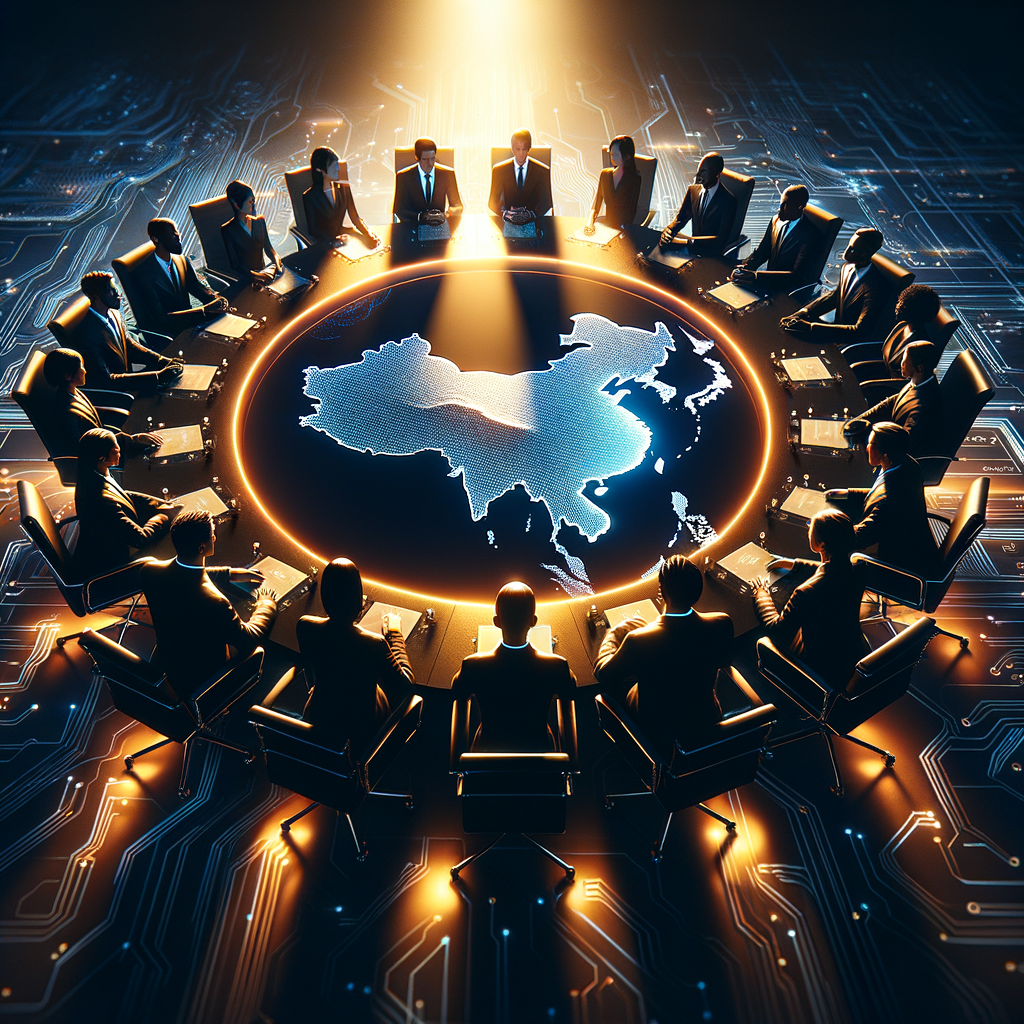
OpenAI, Anthropic, and Google announced on April 6 that they’re sharing proprietary detection methods and terms-of-service violation intelligence through the Frontier Model Forum to combat Chinese adversarial distillation attacks on their frontier models — a dramatic escalation of AI geopolitical risk. Bloomberg reported the coordination is unprecedented between these direct competitors. The Japan Times confirmed the scope of the intelligence-sharing agreement.
Three companies that collectively spend tens of billions trying to outship each other just agreed to pool security intelligence. That tells you how serious the threat is.
What matters for your business is the vendor risk. If geopolitical conflict now shapes how your AI providers operate, build partnerships, and allocate compute resources, geopolitical risk belongs in your vendor evaluation criteria. Most businesses haven’t stress-tested their AI stack for this.
Quick Assessment: Does This Affect You?
| Factor | Lower Risk | Higher Risk |
|---|---|---|
| Frontier AI vendors in stack | 3+ with abstraction layer | 1, hard-coded |
| Revenue dependency on AI workflows | <10% of operations | >30% of operations |
| Data sensitivity | Public / non-regulated | Regulated / PII-heavy |
| Vendor geographic diversity | Multi-region providers | All US-based frontier |
| Supply chain visibility | Track compute and model sourcing | Don’t track |
Three or more checks in the right column? Keep reading.
What Happened on April 6
The Frontier Model Forum was originally formed in 2023 as a safety research collaboration. On April 6, its three most prominent members activated something different: a joint intelligence-sharing operation targeting Chinese labs that are systematically distilling frontier model capabilities without authorization.
The specific mechanism matters. According to Bloomberg’s reporting, the three companies are now sharing:
- Detection methods for identifying when their models’ outputs are being systematically harvested for distillation training
- Terms-of-service violation intelligence identifying specific actors and techniques
- Technical countermeasures being deployed across all three platforms simultaneously
This follows months of individual accusations. OpenAI accused DeepSeek of distilling its models in February. Anthropic followed weeks later, naming DeepSeek, MiniMax, and Moonshot AI. Google had its own concerns. What changed in April is that they stopped fighting individually and started coordinating.
What Is Adversarial Distillation?
Adversarial distillation is when a lab systematically queries a frontier model to generate massive training datasets, then uses those outputs to train a cheaper model that replicates most of the original’s capability at a fraction of the cost. The “adversarial” part means they’re doing it at scale, violating terms of service, and specifically targeting the reasoning patterns that justify premium pricing.
Think of it as reverse-engineering a recipe by ordering the dish a million times and analyzing every ingredient. The original chef spent years developing the technique. The copier just needs enough samples and a good enough palate.
For enterprise buyers, the concern is direct: if Chinese labs can replicate 80-90% of a frontier model’s capability at a fraction of the cost, the competitive moat your AI vendor charges premium pricing for starts eroding. And if your vendor is now spending engineering resources on detection and countermeasures instead of capability improvements, that affects your roadmap too.
Why Competitors Cooperating Is the Real Signal
The threat of model distillation has existed for over a year. What’s new is the response.
OpenAI, Anthropic, and Google compete ferociously for enterprise accounts. I wrote about Claude winning enterprise deals from ChatGPT last month and Microsoft building its own models to reduce OpenAI dependency the week before. These companies don’t cooperate casually.
When three fierce competitors decide a shared threat outweighs competitive advantage, the threat is existential to their business model. They’re protecting the value of frontier model development itself. If distillation becomes trivially easy, the economics of spending billions to train the next generation stop making sense.
For your vendor strategy, this means the companies building your AI tools now have a shared adversary affecting their investment calculus. That’s a variable most procurement teams have never modeled.
The Anthropic Infrastructure Play Makes This Messier
The same week as the Frontier Model Forum announcement, Anthropic separately signed a compute deal with Google and Broadcom for multiple gigawatts of TPU capacity arriving in 2027, per Bloomberg. Gigawatts. The kind of power allocation that locks frontier AI infrastructure into specific geopolitical supply chains for years.
Anthropic’s next generation of models will run on Google-designed TPUs manufactured through fabrication partners concentrated in specific Asian supply chains. Your AI vendor’s training infrastructure now has geographic and trade-policy dependencies that didn’t exist two years ago.
If you’re an enterprise running critical workflows on Claude, your business continuity is indirectly tied to semiconductor supply chains, US-China trade policy, and compute infrastructure deals negotiated between companies you have no contractual relationship with. That’s a category of vendor risk that didn’t exist in your procurement playbook 18 months ago.
The Revenue Concentration Problem
Anthropic crossed $30 billion in annualized revenue in April 2026, up from roughly $9 billion at the end of 2025, according to The Information. They now have over 1,000 enterprise customers spending $1 million or more per year, per the company’s own disclosures. That’s 3x growth in a year, and it means billions in enterprise revenue are now concentrated in a company that is simultaneously:
- Coordinating with competitors on geopolitical security
- Locking in multi-year compute infrastructure deals with geographic dependencies
- Growing so fast that operational disruption would cascade across thousands of enterprise workflows
The same concentration risk applies to OpenAI and Google’s AI divisions. These three companies handle the majority of frontier AI inference for US and European enterprises. A coordinated disruption affecting all three (which is exactly the scenario the Frontier Model Forum is designed to prevent) would hit enterprise operations across every industry.
This isn’t fear-mongering. It’s math. When your mission-critical AI workflows run on providers who share adversaries, infrastructure dependencies, and now intelligence, the correlation risk in your AI stack is higher than most business continuity plans account for.
What Your Vendor Evaluation Is Missing
Most enterprise AI vendor evaluations cover capability, pricing, SLAs, data handling, and compliance. After April 6, you need a sixth category: geopolitical risk exposure.
5 Questions to Add to Your AI Vendor Assessment
- Where does your vendor train its models? Which cloud, which chips, which geographic supply chain? The Anthropic-Google-Broadcom deal shows these details carry real risk now.
- How exposed is your vendor to adversarial distillation? If competitors can replicate 80% of the capability at 20% of the cost, what happens to your vendor’s pricing power and R&D investment?
- What happens to your workflows if US-China tech restrictions escalate? If export controls tighten or retaliatory actions affect AI infrastructure, does your vendor have contingency plans?
- How diversified is your AI provider portfolio? Single-vendor dependency on any of these three companies now carries correlated geopolitical risk. A model-agnostic architecture is about risk management, not just pricing flexibility.
- Does your business continuity plan cover AI vendor disruption? Not a single vendor going down for hours. A scenario where geopolitical events affect the entire frontier AI ecosystem simultaneously.
If your team can’t answer these questions, you have a gap in your risk framework.
The Self-Hosting Hedge Gets Stronger
One practical response: increase your exposure to open-weight models that don’t carry the same geopolitical entanglement. I wrote about Gemma 4 making API bills optional last week. Apache 2.0 licensed models running on your own infrastructure don’t care about Frontier Model Forum coordination, adversarial distillation disputes, or compute supply chain dependencies.
Self-hosting isn’t a replacement for frontier models on every task. But for the 60-70% of enterprise AI workloads that don’t require the absolute best model, running a local Gemma 4 or Llama deployment removes an entire category of risk that just got more real.
The portfolio approach I’ve been recommending for cost reasons now has a risk-management rationale too. Use frontier APIs where you need frontier capability. Self-host everything else. The quality gap between open-weight and proprietary models is narrowing fast enough that this works for most business use cases today.
Your Next Steps
- Add geopolitical risk to your vendor evaluation template. The five questions above are a starting point. Your procurement and security teams should review them before your next AI contract renewal.
- Map your AI vendor concentration. If more than 70% of your AI inference runs through a single provider, you have concentration risk that the Frontier Model Forum announcement just made more tangible. Diversify.
- Evaluate open-weight alternatives for non-critical workloads. Pull your API billing, identify the workloads that don’t need frontier capability, and start testing self-hosted alternatives.
- Build or verify your abstraction layer. If you’re still hard-coding model vendor endpoints into application logic, the model-agnostic architecture is now a risk mitigation play, not just a cost optimization.
- Brief your leadership. Most C-suites aren’t tracking the intersection of AI vendor strategy and geopolitical risk. The Frontier Model Forum announcement is a concrete, citable event that makes the conversation real. Use it.
The era of treating AI vendors as neutral infrastructure just ended. OpenAI, Anthropic, and Google themselves told you that geopolitical adversaries are actively targeting the models you depend on. Your vendor strategy should reflect that reality.
Related Reading:
TAGS
What is this worth in your business?
The free Build Audit is 30 minutes. You leave with a ranked list of the automations worth doing in your business, whether or not we build them.
Related Articles
Keep Your Customer Data Out of ChatGPT and Claude
Free ChatGPT and Claude accounts can train on what your team types in. Two switches turn that off for nothing. Here is where to find both tonight.

How to Tell If an AI Vendor's ROI Claim Is Real
Learn the three-question test that separates a real AI vendor ROI number from a marketing one, before you sign the contract or approve the next renewal.
Thomson Reuters Just Answered Your Build vs. Buy Question
Thomson Reuters spent $40M fine-tuning an open-source model on Westlaw data to match frontier performance. Compare that build vs. buy math against your own.